Skim coating fiberglass wallpaper is often a practical alternative to removal when the existing wall covering is dry, firmly bonded and supported by a stable substrate. Once properly levelled, the wall can be finished as a smooth painted surface or with a natural OIKOS lime-based decorative finish.
The project must begin with an assessment of the substrate. A decorative finish cannot repair loose wallpaper, moisture damage or structural movement. A correctly specified skim coat and primer system, however, provides a stable base for a durable finish.
Can fiberglass wallpaper be skim coated?
Previously painted fiberglass wallpaper in good condition can often be skim coated in dry interiors. This is especially useful when removal could damage the board beneath the wallpaper or create unnecessary demolition work.
Skim coating may be suitable when
- the wallpaper is firmly attached across the entire wall;
- seams, corners and edges are not lifting;
- the substrate feels hard and does not flex under pressure;
- there are no odours, stains or soft areas suggesting moisture;
- the room is dry and the selected product system is approved for the intended use.
Removal or more extensive repair is preferable when
- the wallpaper has bubbles, open seams or loose edges;
- board joints move or the wall has long cracks;
- the substrate crumbles or feels soft;
- there are moisture marks or the source of moisture is unknown.
Important: movement in a board substrate can later appear as cracks in a rigid skim coat or mineral finish. If the construction is uncertain, have it assessed before work begins.
Why does paint not hide fiberglass wallpaper texture?
Paint changes the colour, but its thin film follows the relief of the woven surface. The pattern therefore usually remains visible even after several coats. To create a smooth wall, the texture must be filled with a suitable wall filler, sanded and primed before painting.
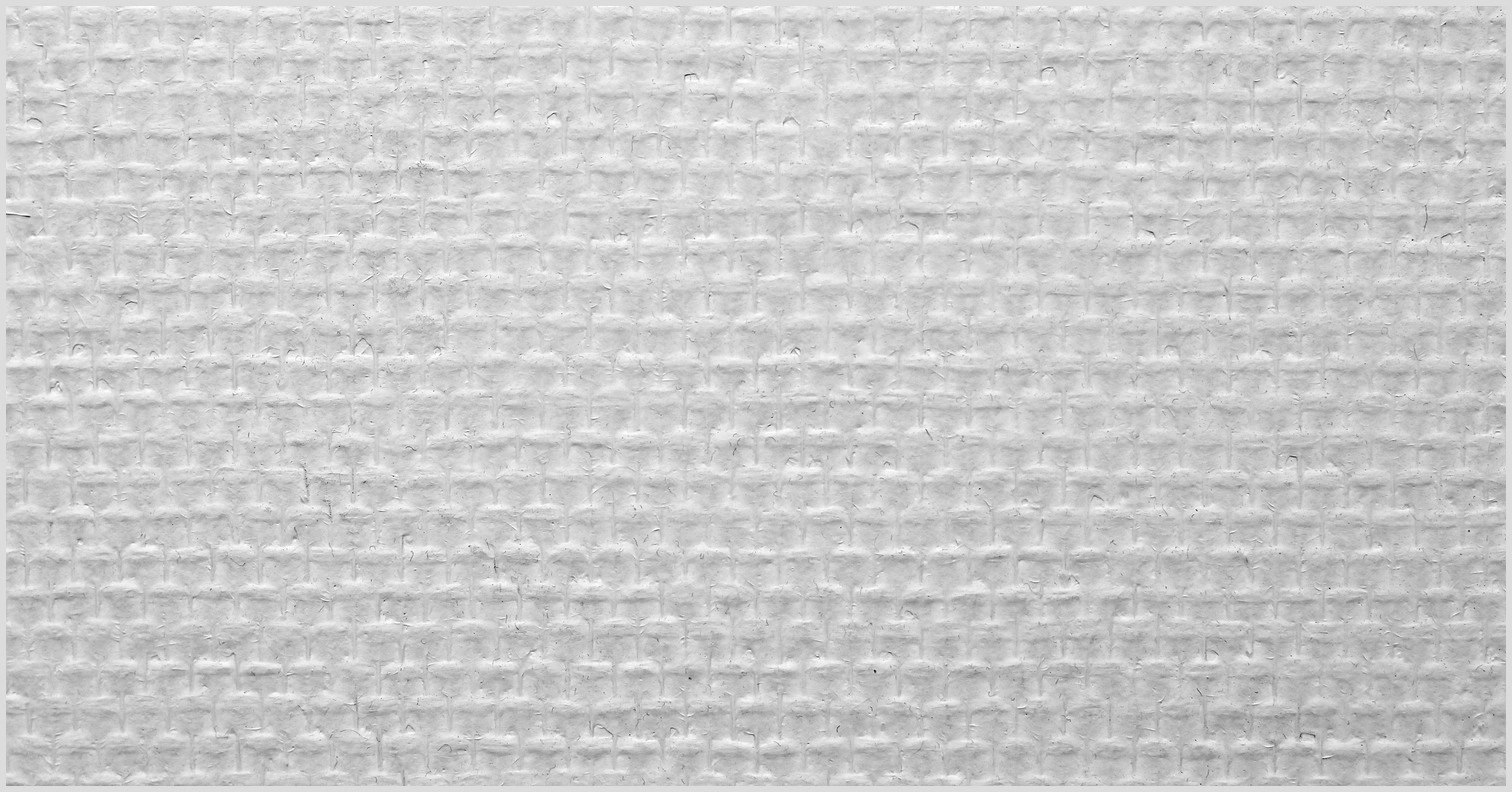
The woven pattern remains visible when the surface is only repainted. Photo: M0tty / Wikimedia Commons, CC BY-SA 3.0.
How to skim coat fiberglass wallpaper
- Inspect the wallpaper and substrate. Check the wall, seams, corners and any bubbles. Remove weak areas and make a test patch if necessary.
- Clean thoroughly. Remove dust, grease and dirt. Lightly abrade a glossy painted surface and remove all sanding dust.
- Repair damage. Fill holes and repair open seams. Resolve the cause of movement or moisture before coating.
- Apply the skim coat. Use a suitable filling compound with a roller or trowel and level the surface. Deep texture may require a second, finer coat.
- Sand and inspect in raking light. Remove ridges and trowel marks, then clean away all dust.
- Prime for the selected finish. A painted wall and an OIKOS decorative finish require their own compatible primer systems.
- Make a sample. Confirm colour, texture and trowel movement before finishing the entire wall.
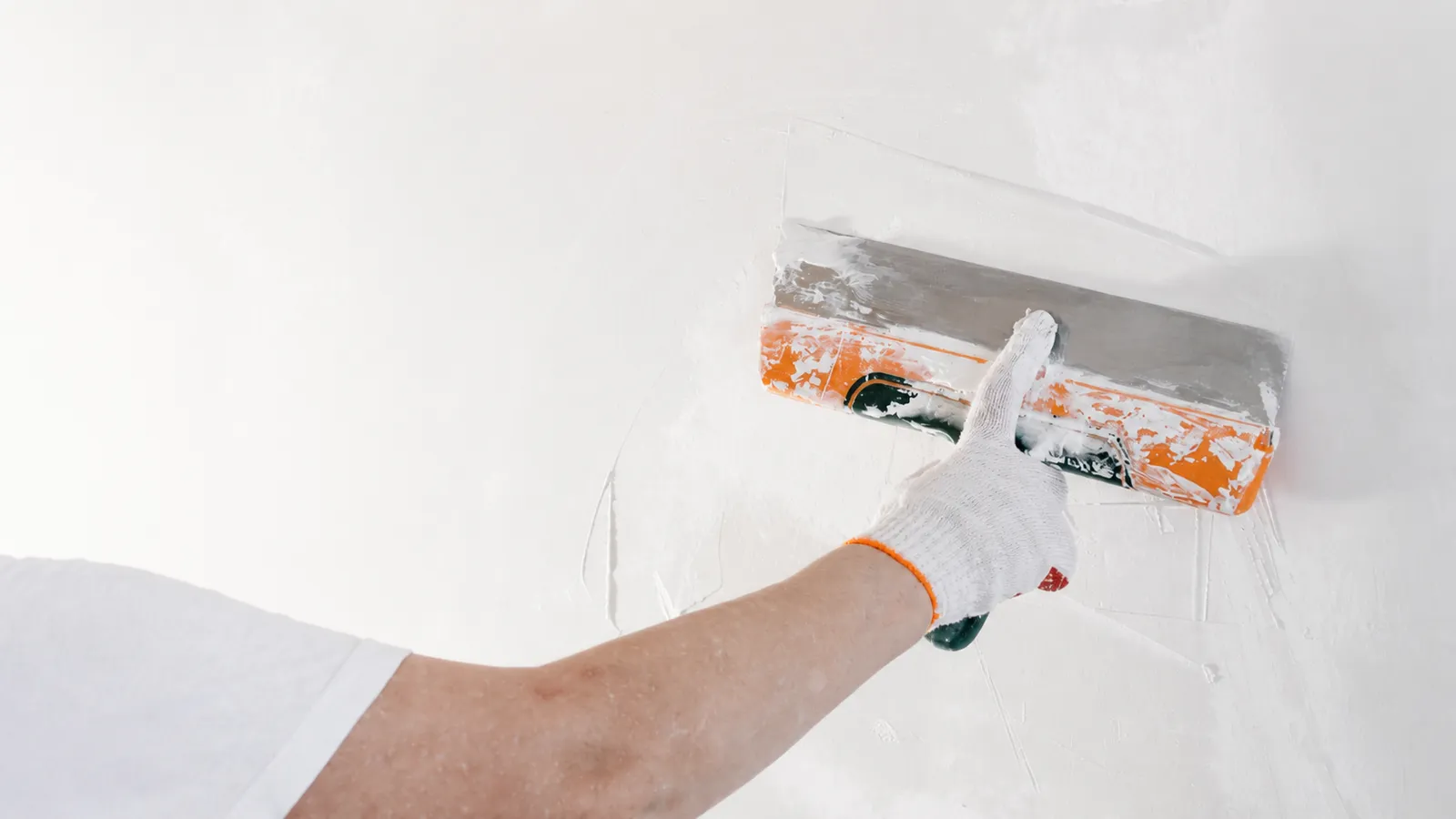
Leave enough filler on the wall to cover the raised weave. Photo: Ksenia Chernaya / Pexels, refined for web use.
Filler and primer have different roles
Wall filler covers the woven texture and levels the surface. Primer controls absorption, strengthens a suitable substrate or improves adhesion for the next layer. These stages do not replace one another.
- Base and finishing filler: fills the texture and creates a smooth substrate.
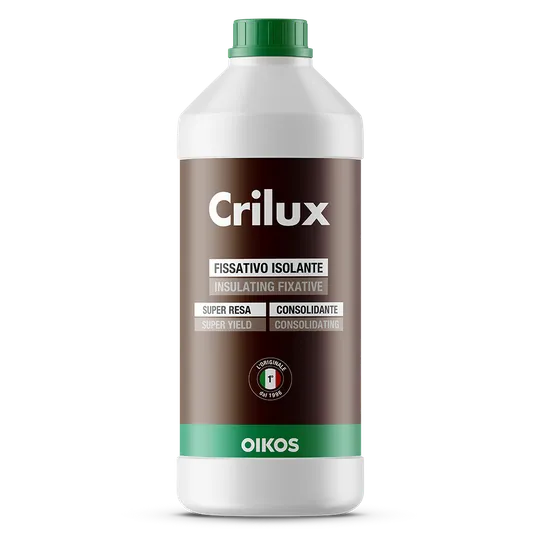
- OIKOS Crilux: a consolidating primer for porous substrates where required by the specified system.
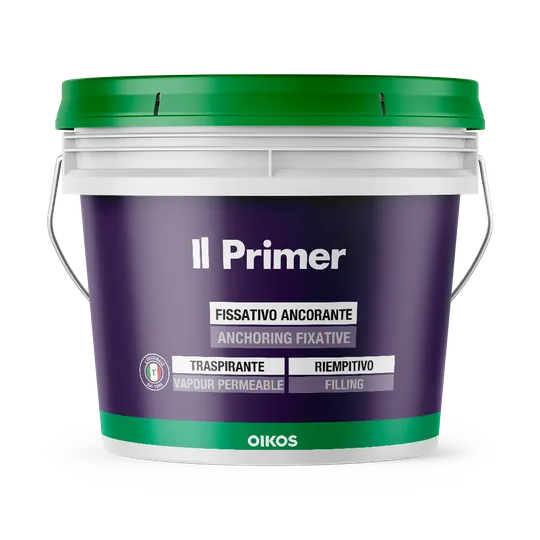
- OIKOS Il Primer: evens the substrate and creates an adhesion-promoting base for decorative finishes. Il Primer is not a wall filler.
- Rasatura alla Calce: a lime-based levelling layer within an OIKOS system, used according to the manufacturer's instructions and the substrate assessment.
Three finishes for the same levelled wall
1. Smooth painted wall
A fully smooth painted finish requires accurate skim coating and sanding. Strong raking light reveals even small ridges, so the wall should be checked before priming. Matt paint creates a calm appearance, but it will not conceal inadequate preparation.
2. Restrained Marmorino finish
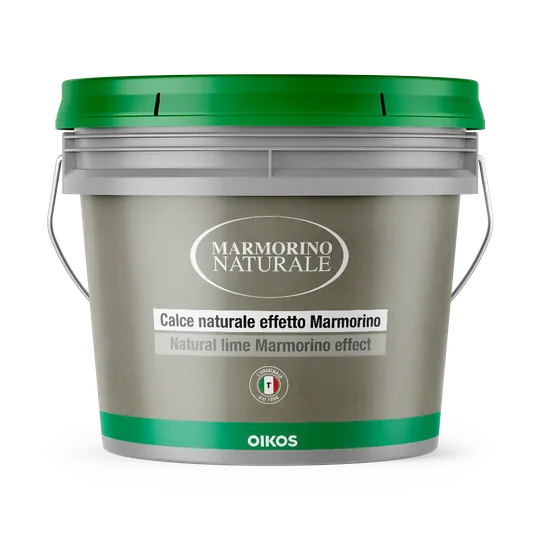
Marmorino Naturale Fine is a fine-grained lime-based finish for an almost smooth, understated surface. Marmorino Naturale provides more mineral texture and depth created by the movement of the trowel. Depending on the selected system, the finish can remain softly matt or be polished.

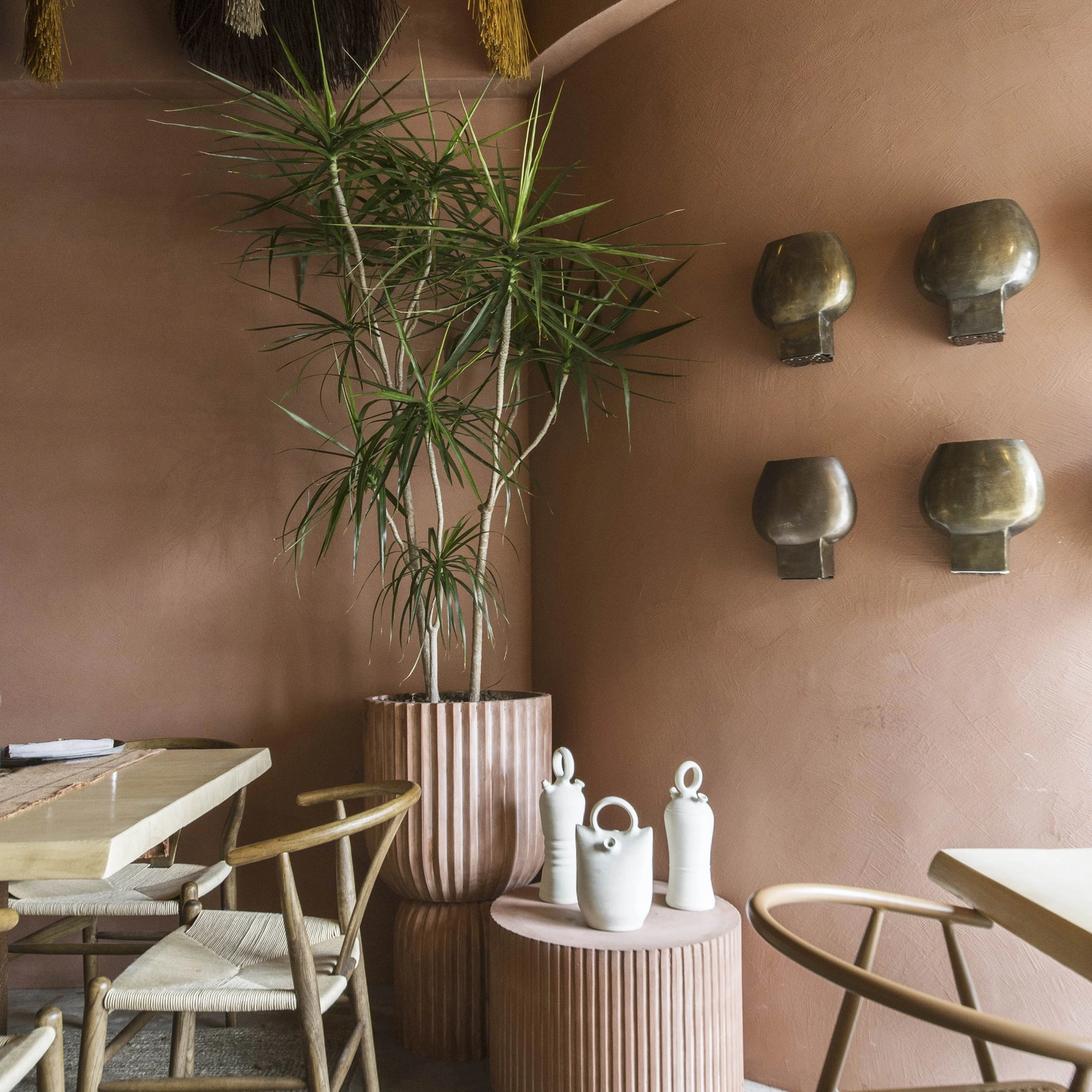
Images: OIKOS – Marmorino Naturale Fine and Marmorino Naturale.
3. Stone-like Travertino
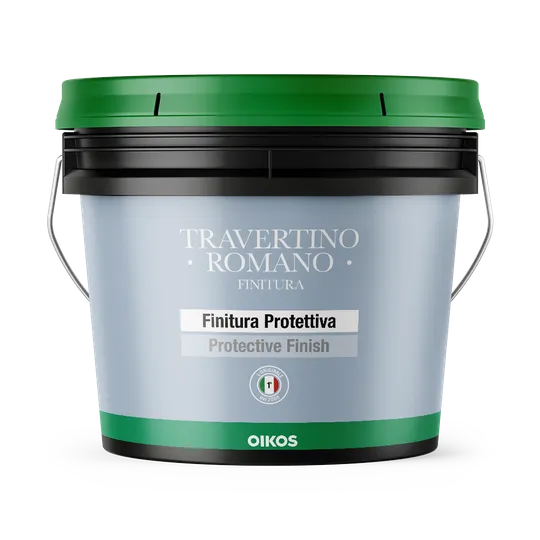
Travertino Romano is suited to walls where a more pronounced, natural-stone character is desired. Application techniques can create a monolithic stone surface, natural pores or more defined blocks. Travertino Romano Finitura completes the system and highlights the tonal variation of the surface.
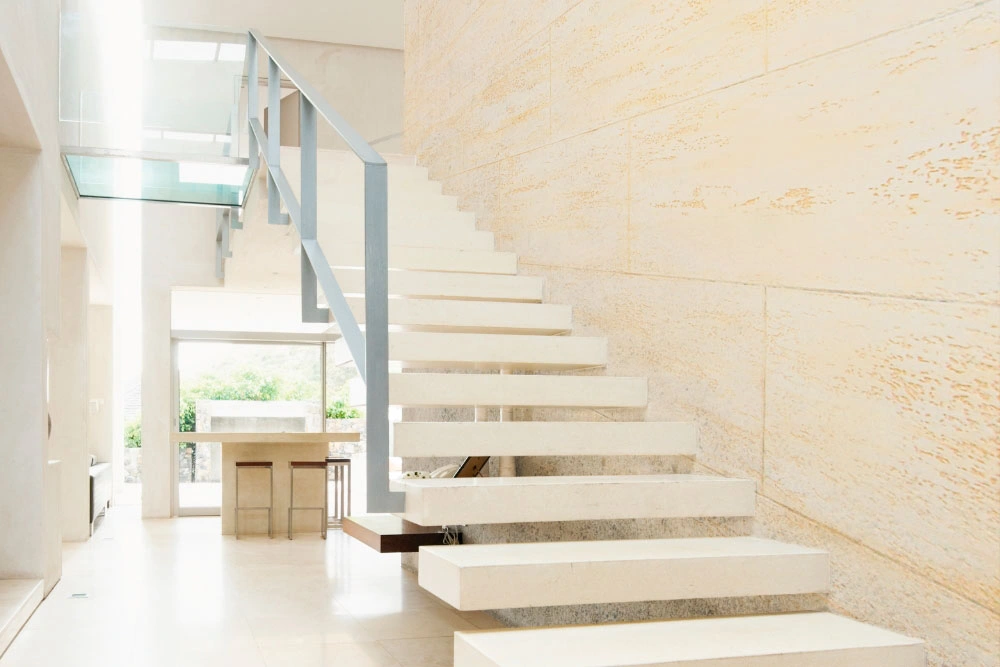
Image: OIKOS – Travertino Romano.
Marmorino or Travertino?
- Choose Marmorino Naturale Fine for a refined, calm and almost monochrome finish.
- Choose Marmorino Naturale for soft tonal movement and a hand-trowelled mineral surface.
- Choose Travertino Romano for a clearly stone-like texture that changes with the light.
Colour, layer thickness, tools, trowel movement and lighting all affect the result. Always make a sufficiently large sample using the same primer, colour and technique planned for the wall.
When should the work be left to a professional?
- the condition of the wallpaper or substrate is uncertain;
- there is moisture, movement at board joints or long cracks;
- a perfectly smooth finish is required on a large wall with strong raking light;
- the design calls for polished Marmorino, a multi-tone effect or an advanced Travertino pattern;
- the surface is exposed to water or exceptionally heavy wear.
Frequently asked questions
Can fiberglass wallpaper simply be painted?
Yes, if it is in good condition. The colour will change, but the woven pattern will usually remain visible.
Can the texture be hidden completely?
Often it can, when the surface is skim coated with a sufficiently filling product and given a second coat where necessary. Deep texture requires more filler and sanding.
Can Marmorino or Travertino be applied directly to the wallpaper?
Not as a general solution. First verify adhesion, level the texture with a suitable filler and prime according to the selected OIKOS system.
Is this suitable for a wet room?
A filler and lime-finish system designed for dry interiors is not automatically a wet-room system. Moisture exposure, waterproofing, substrate and each product's approved use must be assessed separately.
Ask for an assessment of your wall
Send us a close-up of the texture, a photograph of the entire wall, the approximate area and your preferred finish. We can help determine whether the fiberglass wallpaper should be removed or skim coated and which OIKOS system is suitable.
Contact Deco Paint or email info@decopaint.fi.
Technical note: the condition of the substrate and the selected product system determine the correct method. Always consult the latest product data sheets before starting work.
Related products
Primer Crilux
Quartz adhesion primer Il Primer
Lime Coating Marmorino Naturale
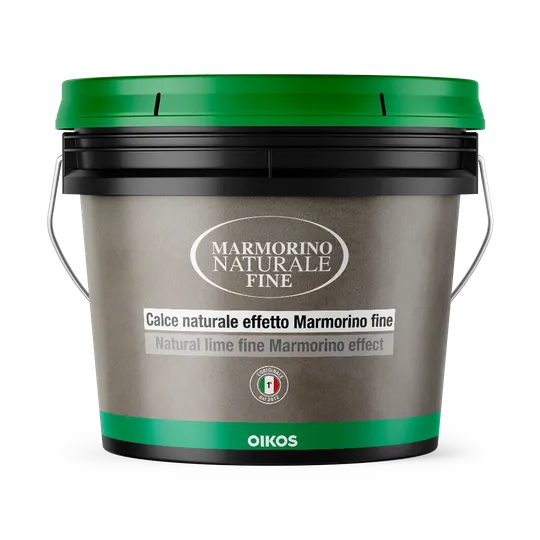
Lime Coating Marmorino Naturale Fine
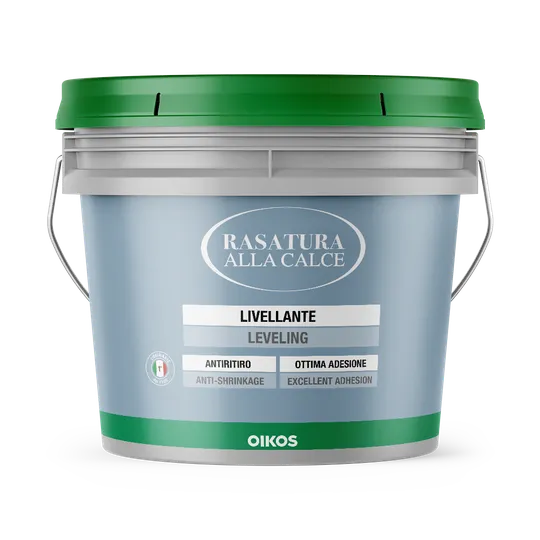
Lime mortar Rasatura Alla Calce
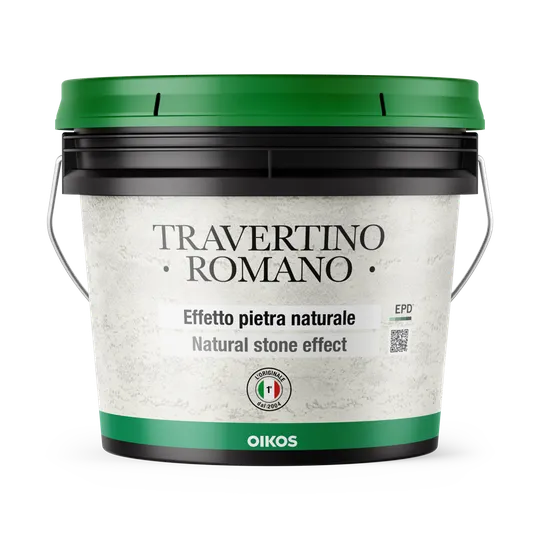
Interior coating Travertino Romano