VOC, A+, EPD and formaldehyde-related claims describe different aspects of paint. One concerns the concentration of volatile organic compounds in the product, another emissions from the finished surface, and a third the product’s life-cycle environmental data. Understanding the difference makes choosing the right interior paint much easier.
The 30-second summary
- VOC g/l indicates the amount of volatile organic compounds in the product.
- A+ is the lowest-emission class in the French A+–C system.
- EPD is a third-party verified environmental declaration based on a life-cycle assessment.
- No added formaldehyde means formaldehyde has not been intentionally added to the formulation; it does not mean the product is completely emission-free.
What do the labels tell you?
| Label | What does it tell you? | What does it not tell you on its own? |
|---|---|---|
| VOC g/l | The concentration of volatile organic compounds in the product. | All emissions from the finished surface or the paint’s durability. |
| A+ | Very low emissions under the French classification. | Zero emissions or the Finnish M1 classification. |
| EPD | Standardised, verified life-cycle environmental data. | That the product is automatically the most ecological choice. |
| Formaldehyde claim | Product-specific information about one compound. | Other possible emissions or the complete environmental profile. |
1. What does VOC mean in paint?
VOC stands for Volatile Organic Compounds. The concentration is usually stated in grams per litre (g/l). EU limits vary by product category, so paints designed for different uses should not be ranked by a single VOC number alone.
The VOC value does not describe scrub resistance, opacity, vapour permeability, coverage or service life. A sound choice combines emission information with the technical performance required by the room.

2. What does A+ mean?
A+ is the highest — and therefore lowest-emission — class in the French indoor-air emission scheme for construction and decorating products. The scale runs from A+ through A and B to C. It assesses substances including formaldehyde, acetaldehyde, toluene, xylene, styrene and total VOCs.
A+ does not mean zero emissions. It means the measured emissions fall below the limits set for class A+.
Is A+ the same as Finland’s M1?
No. M1 is a separate voluntary Finnish classification that evaluates chemical emissions from building materials during use. A+ should not be presented as an equivalent to M1.

3. What does EPD mean?
An EPD (Environmental Product Declaration) is a standardised document that presents transparent, comparable and third-party verified information about a product’s life-cycle environmental impact. The data is based on a life-cycle assessment (LCA).
EPDs are especially useful to designers, contractors and projects that require documented environmental data. An EPD is not a product ranking: meaningful comparisons require the same product category, functional unit and system boundaries.
4. “Formaldehyde-free” or “no added formaldehyde”?
No added formaldehyde means formaldehyde has not been intentionally added to the formulation. Formaldehyde-free is a stronger product-specific claim that should be checked against the manufacturer’s current documentation. Neither phrase describes every possible emission from a product.
For OIKOS 306 BioAntimuffa, the manufacturer uses the precise wording no added formaldehyde. The product also carries an A+ emission rating and EPD documentation.
5. Is water-based paint automatically ecological?
Water is the primary diluent in water-based paint, but the formula may still contain film-formers, preservatives, pigments and other functional additives. A better comparison considers VOC, emission testing, EPD, scrub resistance, vapour permeability, coverage and intended use together.
Which OIKOS interior paint suits each need?
| Product | VOC | Documentation | Scrub class | Especially suitable for |
|---|---|---|---|---|
| 301 BioSuperTraspirante | < 1 g/l | A+ | 3 | Highly breathable matt surfaces, Sd 0.0005 m |
| 305 BioLavabile | < 6 g/l | A+ / EPD | 2 | Breathable walls that also need regular wiping |
| Supercolor | max. 12 g/l | A+ / EPD | 2 | General interior walls, offices and large areas |
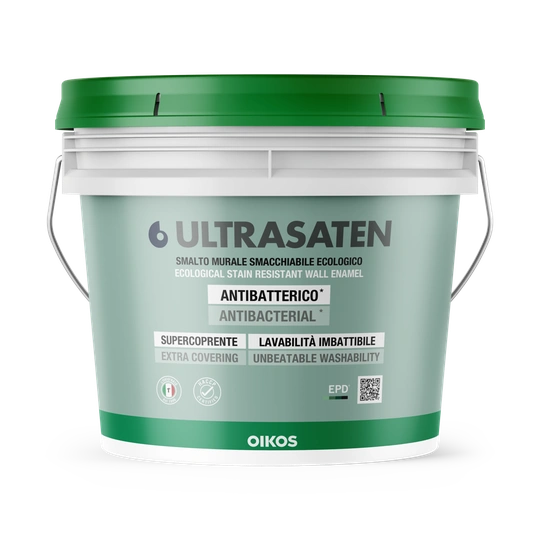
| Ultrasaten | matt/semi-gloss max. 28 g/l; gloss max. 80 g/l | A+ / EPD | 1 | Heavy use and frequent cleaning |
| 310 BioSmacchiabile Opaco | < 1 g/l | A+ / EPD | 1 | Highly cleanable, stain-resistant matt surfaces |
| 306 BioAntimuffa | < 1 g/l | A+ / EPD | 3 | Interior walls exposed to mould and algae risk |

For mould problems, paint is part of a system
Mould-resistant paint cannot repair a leak, insufficient ventilation, moisture damage or defective waterproofing. The structural cause must be investigated and corrected before surface treatment.
Once the substrate is suitable for painting, visible growth is cleaned according to the manufacturer’s instructions with Sterylfix and, where required, treated with penetrating Sterylsan before applying 306 BioAntimuffa.
Six questions before buying paint
- Which room and level of wear is involved?
- How often must the surface be cleaned?
- What substrate will be painted, and is a primer required?
- Is vapour permeability important for the structure?
- Which documents does the project require?
- What are the area, number of coats and real coverage?
Frequently asked questions
Is A+ the same as M1?
No. A+ is the lowest-emission class in the French system; M1 is a separate Finnish classification.
Is an EPD an ecolabel?
An EPD is a verified environmental declaration, not a rating. It makes life-cycle data transparent and comparable within the appropriate scope.
Should I always choose the lowest VOC number?
Not on that basis alone. The paint must also suit the substrate, wear, cleaning regime and desired finish.
Unsure which paint to choose? Ask Deco Paint
Send us a photo of the wall, the room’s use, surface area, current material, preferred colour and cleaning requirements. We will help you select the paint, primer and correct quantity.
Sources: product data was checked against current Deco Paint product pages and OIKOS manufacturer information. The descriptions of A+, M1 and EPD are based on official information from Légifrance, Rakennustieto and the International EPD System. Always check the current technical data sheet for your project.
Related products
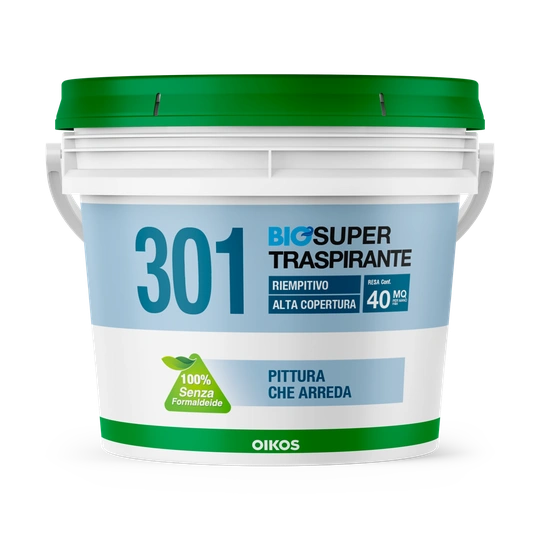
Interior paint 301 BioSuperTraspirante
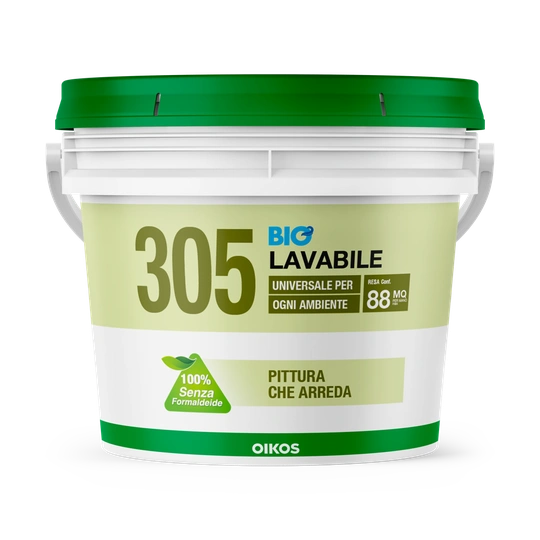
Interior paint 305 BioLavabile
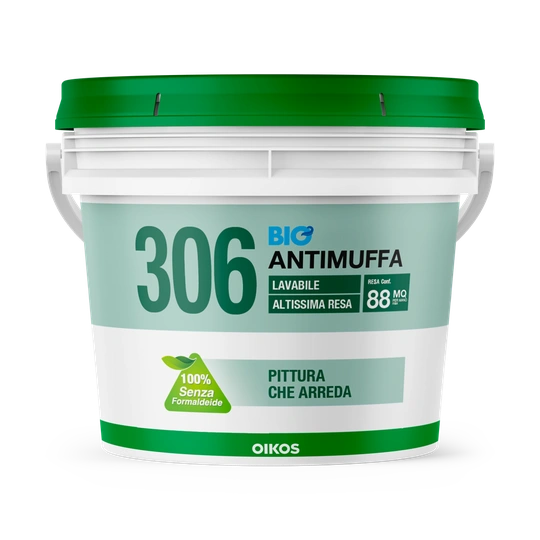
Mold-resistant paint 306 BioAntimuffa
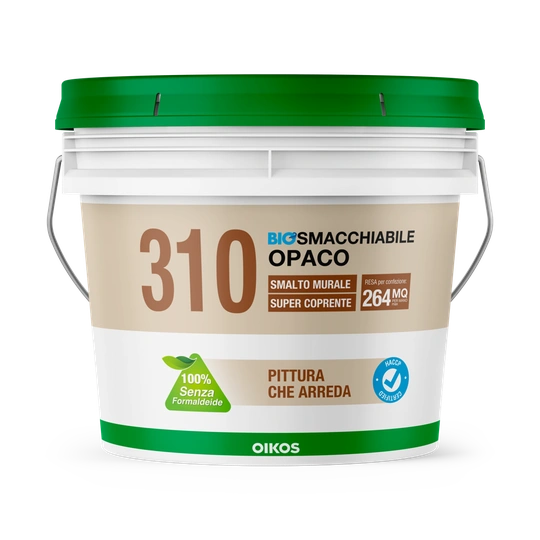
Interior paint 310 BioSmacchiabile Opaco
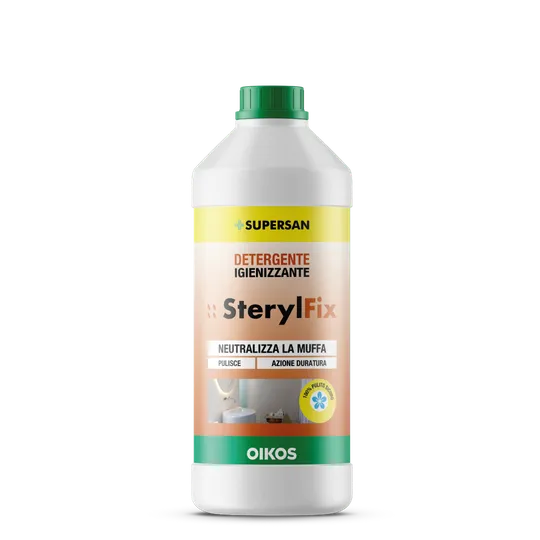
Mold remover Sterylfix
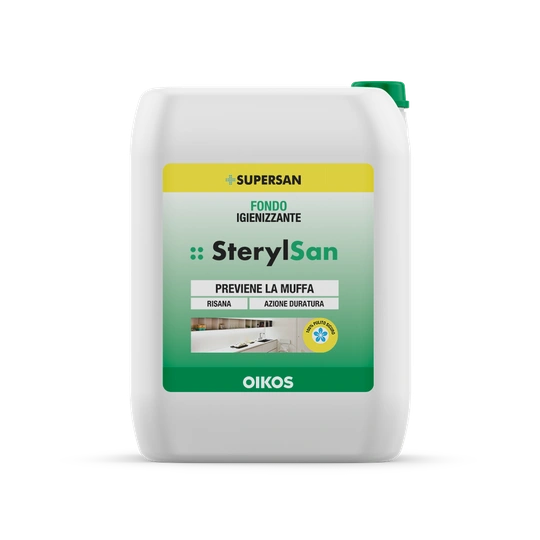
Mold inhibitor Sterylsan
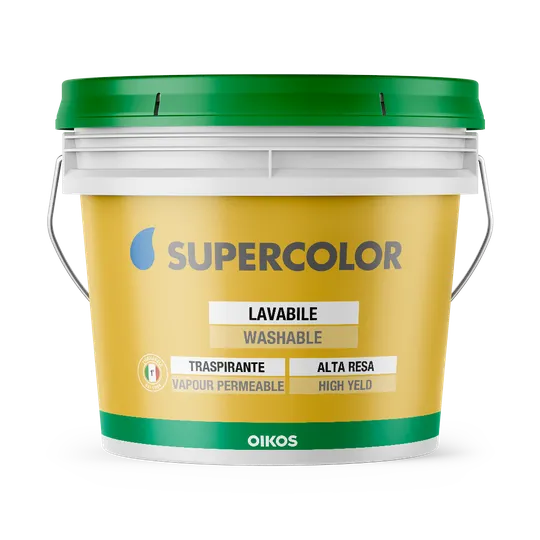
Interior paint Supercolor